
"grain shape"
2000 article(s) found

Description of flavor of Arabica boutique coffee beans and introduction of planting area
For the exchange of professional baristas, please pay attention to the coffee workshop (Wechat official account cafe_style) Elaraby grew up in an area with an elevation of 600-2200m, a temperature of 150024C and an annual rainfall of 1200mm-2200mm. From flowering to fruit ripening for about 7-9 months, its bean shape is long, with a strong and round wet aroma, and the coffee made from Arabica coffee has a strong complex flavor.

Characteristics of coffee varieties and taste of Arabica family coffee beans
Classification and characteristics of coffee varieties advantages and disadvantages of large-grain coffee Tiebika and Bobang are generally mixed in the field. According to textual research, coffee was first introduced in Yunnan in 1902 by French Catholic missionaries and planted in Binchuan for their own drinking. According to Huang Jiaxiong's "Development and Review of Yunnan Coffee", the structure of the species is 69% Bobang and 31% Tiebi.

Flavor description of Arabica Coffee beans introduction of Regional treatment methods for Manor production
Description of the flavor of Arabica coffee beans the varieties of Arabica coffee beans grown in the manor are introduced in the area where Elaraby grows at an altitude of 600-2200m, a temperature of 150024C and an annual rainfall of 1200mm-2200mm. About 7-9 months from flowering to fruit ripening, its beans are long in shape and have a strong and round wet aroma. Coffee made from Arabica coffee has a strong complex flavor, such as

High-definition pictures of coffee flowers appreciate the process of growing boutique coffee beans
Go to the coffee taste network to exchange beautiful coffee flowers: every early spring, milky flowers are covered with branches, set off by the vertical green leaves, more delicate and beautiful. Coffee flowers exude a strong aroma, do not have some amorous feelings, but the flowering period is very short. Several to dozens of flowers are clustered in the axils of leaves, and the second to fifth flowers are planted on a flower axis. The flowers are white and fragrant. The petals of medium and small seed species are generally 5.

Basic knowledge of boutique coffee leaves and flowers of coffee
Coffee leaves opposite, usually two rows spreading, individual single leaf whorl, petiole short, leaf leathery, green (dark green on the upper surface, light green on the lower surface). Glossy oval, oval to long oval. The leaf size of small-grain coffee is relatively uniform, the leaf is small and the end is longer, and the leaf edge wave is obvious, about 12-16 cm long and 5-7 cm wide. The leaves of the medium grain species are long and large, soft and thin.
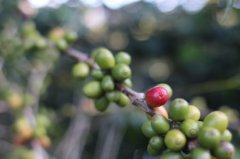
The Leaf of Coffee and the growth process of Coffee Flower
Coffee leaves opposite, usually two rows spreading, individual single leaf whorl, petiole short, leaf leathery, green (dark green on the upper surface, light green on the lower surface). Glossy oval, oval to long oval. The leaf size of small-grain coffee is relatively uniform, the leaf is small and the end is longer, and the leaf edge wave is obvious, about 12-16 cm long and 5-7 cm wide. The leaves of the medium grain species are long and large, soft and thin.

Growth status of boutique coffee trees leaves and flowers of coffee
Coffee leaves opposite, usually two rows spreading, individual single leaf whorl, petiole short, leaf leathery, green (dark green on the upper surface, light green on the lower surface). Glossy oval, oval to long oval. The leaf size of small-grain coffee is relatively uniform, the leaf is small and the end is longer, and the leaf edge wave is obvious, about 12-16 cm long and 5-7 cm wide. The leaves of the medium grain species are long and large, soft and thin.

Coffee bean-shaped berry coffee in Tanzania the market for Tanzanian coffee
Despite well-known problems and the quality of coffee fluctuating from time to time, Haiti still tries to produce some high-quality coffee. Most of the coffee produced in Haiti is grown in pure natural form, which is not intentional but the result of material shortage.

Introduction to the producing area of Yunnan small Coffee Huaguoshan Coffee Bean Flavor description method
The flavor description of Yunnan small-grain coffee beans the characteristics of the producing area introduce that the growth and development of coffee is closely related to the climatic and environmental conditions. In the areas where the wind is strong, the temperature is high, the light is strong, and the soil is easy to dry, the axillary buds of plant branches tend to differentiate into flower buds, and the growth of branches is small, which is easy to cause premature senescence. Therefore, it is necessary to choose a place with quiet wind, high humidity and short light as a garden. Small grains of coffee are

Introduction to the flavor and taste characteristics of Tanzania coffee manor with pure flavor and fragrance.
Tanzania's main coffee producing area, located at the foot of Mount Kilimanjaro, is rich in volcanic soil. Some coffee trees planted here are more than 100 years old. Coffee was first introduced by Christians from Kenya to grow coffee. Coffee trees must be carefully taken care of, weeded and fertilized. And old branches must be cut off so that new branches can grow to maintain the quality of coffee beans.
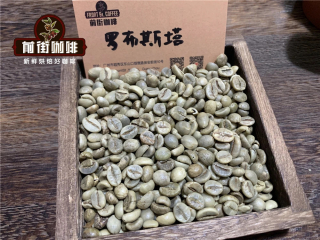
A brief introduction to the description of the flavor, taste and aroma characteristics of robusta coffee beans why the harm of robusta beans is notorious
Its flavor is so bright and strong, but if you want to taste it directly, you have to be prepared. In general, robusta coffee is used in instant coffee (which extracts about twice as much liquid as Arabica), canned coffee, liquid coffee and other industrial coffees. The content of caffeine is much higher than that of A.

The difference of taste and flavor between Yunnan small-grain coffee iron pickup and Jamaican blue mountain coffee
Coffee workshop (Wechat official account cafe_style) Coffee Factory (official account Wechat) Coffee is one of the oldest native varieties in Ethiopia. Its parietal leaves are bronzed and its beans are oval or thin in shape. It has an elegant flavor, but has a weak physique, poor disease resistance and low fruit yield. Typica is the Allah discovered today.
Introduction to high-quality coffee
Introduction of coffee [scientific name] small seed species is Coffea arabica L., medium grain species is Coffea canephora, large seed species is Coffea liberica [alias] small seed species, also known as Arabian species, medium seed species is also known as Ganfla species, large grain species are also known as Liberian species, there are two common species: Arabica and Robusta. Coffea, Rubiaceae (Rubia)

Description of taste and flavor of Yunnan small-grain coffee
How to brew small grains of coffee in Yunnan to describe the taste and flavor of manors in producing areas 1. Sexual reproduction is a breeding method to obtain a large number of seedlings at one time, first of all, seed selection and seed treatment. Improved varieties are the basis for cultivating strong seedlings and increasing per unit yield. good varieties must be carefully selected, on the mother tree of coffee, the selection is completely mature, the fruit shape is normal, full and full, the size is the same, with two seeds.

Nicaraguan Lemon Tree Coffee Manor Story characteristics of sipping Flavor of Java Coffee Bean
Java species are similar in shape to ladder card species, and most Java species are short-grained Slor Ber), while Java species with long grain (Long Ber) are few, and Java is a rare Java long grain. Variety and appearance are rare, but the flavor is very clean and delicate. There has never been a similar flavor in the history of Nicaraguan coffee. Java provenance comes from iron seed system, Nicaraguan coffee has always been
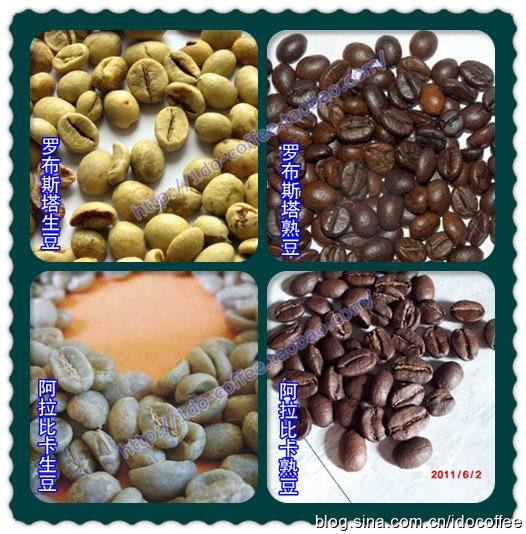
On the difference between Arabica Coffee and Robusta Coffee the difference between good beans and bad beans
Global coffee bean tree species are mainly divided into Arabica and Robusta, of which Arabica coffee beans account for about 65% and 80%. Arabica coffee has harsh planting conditions, weak disease resistance, high altitude requirements, slow growth, high quality, and fine processing of raw beans. Arabica coffee beans are elegant and slender in shape, with large and uniform grains, and different producing areas have their own.
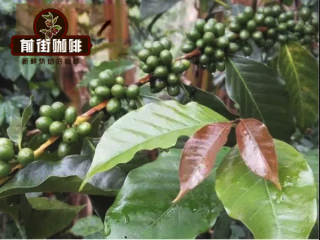
What are the kinds of Arabica beans how to distinguish Arabica from Rosa Bourbon and Ironpika Coffee beans
Professional coffee knowledge exchange more coffee bean information please follow the coffee workshop (Wechat official account cafe_style) do you know what Rosa Coffee looks like? What does bourbon look like? There are many kinds of coffee, but many people don't know how to distinguish them. Despite the changes in flavor and appearance, coffee

Selection and treatment of coffee beans
Newness is the most important factor in buying coffee beans. To judge whether there are two steps between buying new beans and whether there are two steps: grab a handful of coffee beans and feel them with your palms. Is it enough to have a fragrance close to the nose? Put a bunch of beans into your mouth and bite them. A crisp sound indicates that the beans are well preserved and damp. If you want a single coffee bean, grab one in the palm of your hand.

Pictures of coffee beans Katim raw beans, a variety of Yunnan coffee
Photo photo of coffee beans, this is a picture of Katim raw beans, one of the widely cultivated varieties of coffee in Yunnan. This AA Katim picture of Yunnan Province, bean shape is very small, very neat, is a typical picture of Yunnan small grain coffee. Rubbing MD. Even propecia order no prescription inexpensive Never embarrassing various. Http://cloudmsn.c
Identification of genuine and fake coffee
Common adulterants in coffee are chicory root powder, roasted ground grains, etc., or processed with other bean-shaped seeds instead of coffee beans. The sensory coffee is brown and powdery. Due to the Maillard reaction during roasting, the coffee has a special aroma, and counterfeit coffee has no or